Bio Fertilizers Manufacturing

Biofertilizers are substances that contain microorganisms, which when added to the soil increase its fertility and promotes plant growth.

What is Biofertilizer? Biofertilizers are substance that contains microbes,  which helps in promoting the growth of plants and trees by increasing the supply of essential nutrients to the plants. It comprises living organisms which include mycorrhizal fungi, blue-green algae, and bacteria. Mycorrhizal fungi preferentially withdraw minerals from organic matter for the plant whereas cyanobacteria are characterized by the property of nitrogen fixation. Nitrogen fixation is defined as a process of converting di-nitrogen molecules into ammonia. For instance, some bacteria convert nitrogen to ammonia. As a result, nitrogen becomes available for plants.

Types of Biofertilizers

Symbiotic Nitrogen-Fixing Bacteria

Rhizobium is one of the vital symbiotic nitrogen-fixing bacteria. Here bacteria seek shelter and obtain food from plants. In return, they help by providing fixed nitrogen to the plants.

Loose Association of Nitrogen-Fixing Bacteria

Azospirillum is a nitrogen-fixing bacteria that live around the roots of higher plants but do not develop an intimate relationship with plants. It is often termed as rhizosphere association as these bacteria collect plant exudate and the same is used as food by them. This process is termed associative mutualism.

Free-Living Nitrogen-Fixing Bacteria

They are free-living soil bacteria that perform nitrogen fixation. They are saprotrophic anaerobes such as Clostridium beijerinckii, Azotobacter, etc.

Symbiotic Nitrogen-Fixing Cyanobacteria

Blue-Green algae or Cyanobacteria from the symbiotic association with several plants. Liverworts, cycad roots, fern, and lichens are some of the Nitrogen-fixing cyanobacteria. Anabaena is found at the leaf cavities of the fern. It is responsible for nitrogen fixation. The fern plants decay and release the same for utilization of the rice plants. Azolla pinnate is a fern that resides in rice fields but they do not regulate the growth of the plant.

Among all the types of biofertilizers, Rhizobium and Azospirillum are most widely used.

Components of Biofertilizers

Bio Compost

It is one of the eco-friendly product composed of waste material released from sugar industries which are decomposed. It is magnified with human-friendly bacteria, fungi, and various plants.

Azotobacter

It protects the roots from pathogens present in the soil and plays a crucial role in fixing atmospheric nitrogen. Nitrogen is a very important nutrient for the plant and about 78% of the total atmosphere comprises nitrogen.

Vermicompost

It is an Eco-friendly organic fertilizer that comprises vitamins, hormones, organic carbon, sulfur, antibiotics that help to increase the quantity and quality of yield. Vermicompost is one of the quick fixes to improve the fertility of the soil.

Tricho-Card

It is an eco-friendly and nonpathogenic product used in a variety of crops as well as in horticultural and ornamental plants, such as paddy apple, sugar cane, brinjal, corn, cotton, vegetables, citrus, etc. It acts as a productive destroyer and antagonistic hyper parasitic against eggs of several bores, shoot, fruit, leaves, flower eaters and other pathogens in the field.

Phosphorus

Phosphorus is one of the essential nutrients for plants growth and development. Phosphate solubilizing microorganisms, hydrolyze insoluble phosphorus compounds to the soluble form for uptake by plants. Many fungi and bacteria are used for the purpose such as Penicillium, Aspergillus, Bacillus, Pseudomonas, etc.
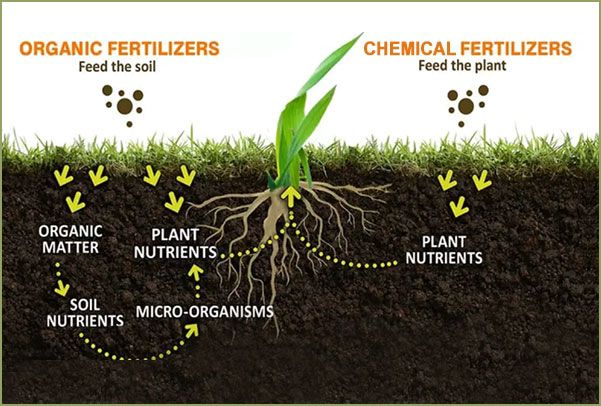
Importance of Biofertilizers

Applications of Biofertilizers

Seedling root dip

This method is applicable to rice crops. The seedlings are planted in the bed of water for 8-10 hours.

Seed Treatment

The seeds are dipped in a mixture of nitrogen and phosphorus fertilizers. These seeds are then dried and sown as soon as possible.

Soil Treatment

The biofertilizers along with the compost fertilizers are mixed and kept for one night. This mixture is then spread on the soil where the seeds have to be sown.

Fertiliser Market

Indian Fertiliser market is segmented into nitrogenous, phosphatic, potash, complex, secondary nutrient, and micronutrient fertilizers on the basis of product. Based on their nature, fertilizers can be classified into chemical fertilizer and biofertilizer. The fertilizer consumption is predominantly driven by urea i.e. ~55% of total consumption, followed by Diammonium phosphate (DAP), Muriate of potash (MOP) and Single superphosphate (SSP). India imports around 30% of its total fertilizer consumption.
In India, the penetration of organic fertilizer is very low i.e. the proportion of organic fertilizer of the total fertilizer consumption is only 0.29% for the year 2018-19 and 0.34% for the year 2019-20. The fertilizer consumption in India was 156.3 kg/ha during the year 2010, which was a meagre 2 kg in 1950. Increased consumption of synthetic chemical fertilizers played a pivotal role in increased crop production thus alleviating hunger in India, but has also resulted in some adverse effects on natural resources like disaster in soil quality and conceivable outcomes of water pollution. Due to these unfavourable outcomes, greater emphasis is being laid on sustainable agriculture practices replacing chemical fertilizer with Organic/bio-fertilizer/compost.

Support for Organic Farming

Government is undertaking various initiatives to promote organic fertilizer/compost in turn to encourage sustainable agriculture practices. The Department of Fertilizers, Ministry of Chemicals & Fertilizers, and Government of India has notified the scheme for promotion of City Compost on 10.02.2016. Under the scheme, Market Development Assistance (MDA) in the form of fixed amount of Rs. 1500 per tonne City Compost is provided on the sale of city compost to Fertilizer Marketing Companies as well as to City Compost manufacturers. Further, to promote the manure produced from CBG plants, Fermented Organic manure and Bio-slurry have been included under FCO 1985. More opportunities are being explored for marketing the Fermented Organic Manure through Oil & Gas Cos. network.